

What Aircraft Buyers Need to Know
Canada’s proposed 100% aircraft write-off could materially change the financial analysis for businesses considering an aircraft purchase.
If your Canadian business has been considering purchasing an aircraft, a federal tax proposal announced on September 15, 2026 could materially change the financial analysis.
The Government of Canada has proposed the Productivity Mega Deduction, a permanent expansion of immediate expensing to a much broader range of depreciable business assets.

Aircraft are specifically included in the government’s announcement.
Under the proposal, qualifying businesses could potentially deduct 100% of the eligible capital cost of qualifying property in the taxation year in which it becomes available for use, rather than claiming that cost gradually through the normal Capital Cost Allowance system.
The short version: if an aircraft already makes sense for your business, this proposal could make the timing and financial structure of the acquisition considerably more interesting. It should not, however, be the reason you buy the wrong aircraft.
There is no stated $1.5 million or $2 million cap
| Eligible Aircraft Cost | Potential Immediate CCA Deduction |
|---|---|
| $500,000 | Up to $500,000 |
| $2,000,000 | Up to $2,000,000 |
| $5,000,000 | Up to $5,000,000 |
| $10,000,000 | Up to $10,000,000 |
This is one of the most important distinctions.
Canada previously had a temporary immediate-expensing program for eligible small businesses that included a $1.5 million annual limit.
The September 2026 proposal is structured differently. The new draft legislation does not carry that fixed $1.5 million annual limit into the new immediate-expensing regime.
For corporations, the draft legislation bases the immediate-expensing deduction on the undepreciated capital cost of qualifying immediate-expensing property that becomes available for use during the taxation year rather than imposing a stated fixed dollar ceiling.
So the opportunity is not limited to a $1 million or $2 million aircraft.
Subject to the taxpayer, aircraft and transaction qualifying under the final rules, the basic concept could look like this:
Those figures represent potential deductions from taxable income. They are not tax refunds.
A company purchasing a $5 million qualifying aircraft does not simply get $5 million back from the government.
The actual tax savings will depend on the company’s taxable income, applicable tax rates, corporate and ownership structure, business use and other circumstances.
That part needs to be worked through with the buyer’s accountant or tax lawyer.
Do aircraft actually qualify?
The federal government’s September 15 announcement specifically names aircraft among the investments included in the expanded immediate-expensing regime.
CRA generally classifies aircraft acquired after May 25, 1976 as Class 9 property for Capital Cost Allowance purposes.
Class 9 is not included in the list of excluded property contained in the September proposal and draft legislation.
Depending on the specific taxpayer, aircraft and use, this could therefore be relevant across a wide range of business aviation, including piston aircraft, helicopters, turboprops and business jets.
What about used aircraft?
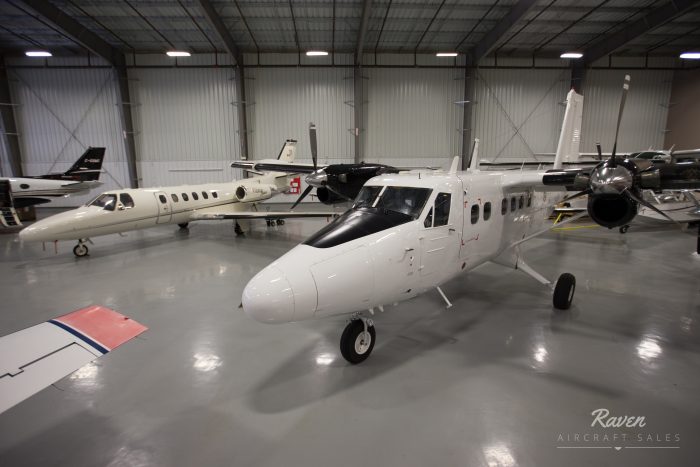
This is where the proposal becomes particularly interesting for the aircraft market.
The aircraft does not necessarily have to be new.
Finance Canada’s proposal specifically allows previously used property to qualify when certain conditions are met.
Among the important restrictions, the property generally cannot have been previously owned or acquired by the taxpayer or by a person or partnership with whom the taxpayer did not deal at arm’s length. Certain tax-deferred transfers are also restricted.
In practical terms, a normal arm’s-length acquisition of a qualifying pre-owned aircraft may potentially be eligible.
That’s important because buying a new aircraft simply to obtain favourable tax treatment makes very little sense if a five-year-old or fifteen-year-old aircraft is actually the better solution for the mission.
The aircraft should still be chosen based on what it needs to accomplish.
Financing the aircraft
Another question that immediately comes up is financing.
Consider a business purchasing an aircraft for $5 million.
The company contributes $1 million in cash and finances the remaining $4 million.
That does not generally mean the aircraft suddenly has a $1 million capital cost for CCA purposes simply because only $1 million was paid in cash at closing.
CRA describes capital cost as generally being the taxpayer’s full cost of acquiring the property, including the purchase price and certain acquisition-related costs.
This potentially makes immediate expensing relevant even where a substantial portion of an aircraft acquisition is financed.
There are obviously other questions involving financing, interest, ownership structures and the taxpayer’s ability to use the deduction. Those belong with the purchaser’s tax advisers.
Timing could matter
There is another phrase aircraft buyers should become familiar with: available for use.
CCA normally becomes available when property meets Canada’s available-for-use rules, and the proposed immediate-expensing regime uses that same concept.
That does not simply mean signing a purchase agreement or wiring a deposit.
Exactly when a particular aircraft satisfies the tax test depends on the facts, which is another reason to have your accountant involved in the transaction.
From the aircraft side, the bigger issue is that buying an aircraft properly takes time.
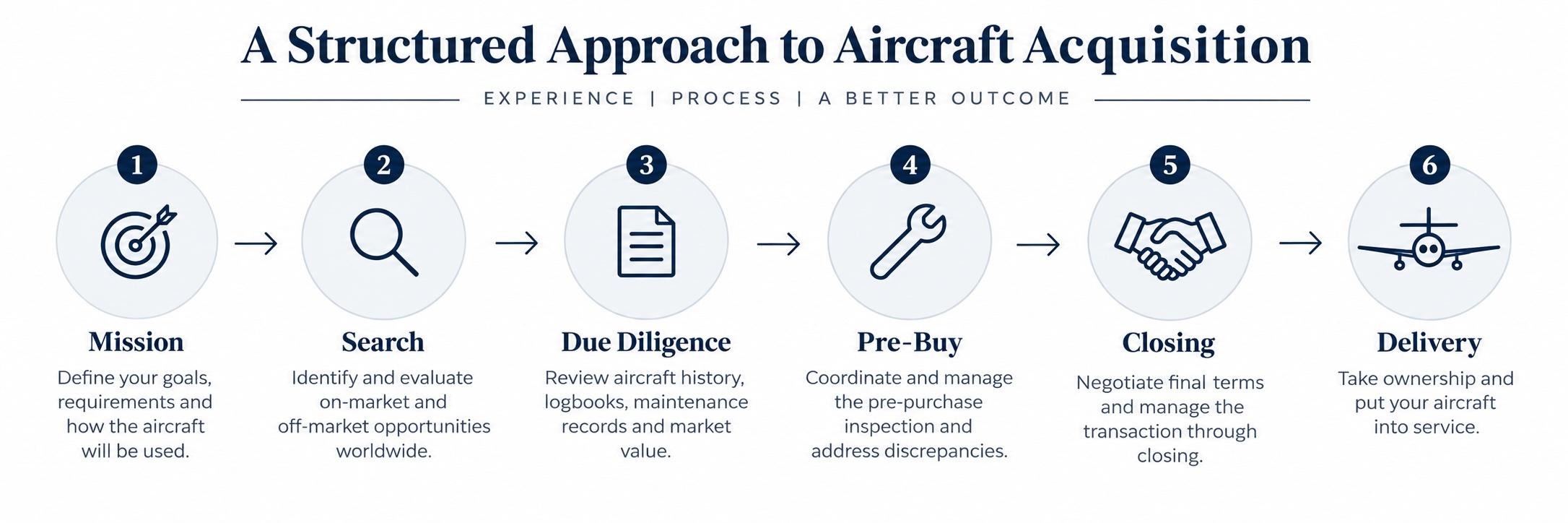
A normal acquisition can involve defining the mission, locating suitable aircraft, market analysis, negotiations, logbook and maintenance-record review, a pre-purchase inspection, correction of discrepancies, financing, insurance, registration, import or export work, closing and delivery.
That process might take weeks. On a complicated transaction it can take considerably longer.
If your tax adviser tells you that having an aircraft available for use within a particular taxation year matters, don’t wait until the final weeks of the year to start looking.
More importantly, don’t sacrifice due diligence to meet a tax deadline.
A large tax deduction on the wrong aircraft is still the wrong aircraft.
What about personal use?
Corporate aircraft frequently have some mixture of business and personal use, and CRA has specific rules dealing with that situation.
Personal use can affect the CCA that may be claimed and can also result in taxable benefits to shareholders or employees.
This is an area where assumptions can get expensive.
Putting an aircraft inside a corporation does not automatically make every flight a business flight or every cost deductible.
The expected use of the aircraft should be discussed with the company’s tax advisers when the ownership and operating structure is being developed.
What happens when you sell the aircraft?
There is another side to taking a very large deduction up front.
Canada’s CCA system includes recapture rules.
When depreciable property is eventually sold, some previously claimed CCA may have to be brought back into income depending on the proceeds of disposition and the remaining undepreciated capital cost of the applicable class.
That doesn’t mean immediate expensing isn’t valuable.
It means it should be viewed properly: it can dramatically accelerate when a deduction is received, but it isn’t necessarily a permanent disappearance of tax.
The future disposition of the aircraft should form part of the analysis.
Should you buy an aircraft because of this tax proposal?
No.
That’s backwards.
The first question should still be whether an aircraft solves a legitimate business problem.
Where are you travelling?
How often are you travelling there?
How many people typically need to go?
What airports need to be accessible?
How much employee or executive time is being lost through airline schedules and connections?
What range and payload do you actually require?
What will the aircraft realistically cost to own and operate?
Would ownership make more sense than charter, fractional ownership or another solution?
Those questions determine whether an aircraft makes sense.
Then we determine which aircraft makes sense.
Only after that should the tax treatment become part of the financial analysis.
A tax advantage can make a good aircraft acquisition better. It cannot make the wrong aircraft the right aircraft.
Why the Proposed Aircraft Write-Off Matters Now
This announcement is potentially meaningful across a surprisingly large part of the Canadian aircraft market.
A company considering a $750,000 aircraft should be looking at it.
So should a company considering a $3 million turboprop.
And so should a business considering a $10 million or larger corporate aircraft.
The proposal does not contain a stated $1.5 million or $2 million aircraft limit comparable to the old small-business immediate-expensing cap.
Qualifying used aircraft may potentially be included as well.
For businesses that already have a legitimate operational reason to own an aircraft, that combination is worth discussing with both an aircraft acquisition specialist and the company’s professional tax advisers.
How I work with aircraft buyers

My role is the aircraft side of that equation.
Before looking at airplanes for sale, I want to understand what the buyer is actually trying to accomplish.
From there, I help determine the appropriate aircraft category, identify available and off-market opportunities, evaluate market value, negotiate the purchase, coordinate aircraft and logbook due diligence, manage the pre-purchase inspection process and help carry the transaction through closing and delivery.
The tax analysis belongs with the purchaser’s accountant and tax professionals.
My job is to help ensure that if the decision is made to buy an aircraft, the buyer ends up with the right aircraft at the right value and doesn’t overlook something important in the acquisition process.
If your business is considering an aircraft purchase in 2026 or beyond and you want to discuss the aircraft side of the decision, you can contact me through this website.
Important tax notice
The Productivity Mega Deduction remains proposed legislation as of September 21, 2026. The Government of Canada has released draft legislative proposals, but buyers should not rely on the proposed treatment as enacted law until the legislative process is complete.
This article is general information about aircraft acquisitions and is not tax, accounting or legal advice. Buyers should obtain independent advice from qualified Canadian tax and legal professionals regarding their own circumstances.
Frequently Asked Questions About the Aircraft Write-Off
Is Canada’s 100% aircraft write-off already law?
No. As of September 21, 2026, the Productivity Mega Deduction remains proposed legislation. The Government of Canada has released draft legislation, but aircraft buyers should confirm the final rules with their tax adviser before relying on the deduction. View the Finance Canada announcement.
Can a used aircraft qualify?
Potentially, yes. Finance Canada says previously used property may qualify provided certain conditions are met, including restrictions involving previous ownership by the taxpayer or a non-arm’s-length person and certain tax-deferred transfers. See the official Finance Canada details.
Is there a $1.5 million or $2 million limit?
The new proposal does not contain the old fixed $1.5 million annual immediate-expensing cap. For corporations, the proposed deduction is tied to qualifying immediate-expensing property that becomes available for use during the taxation year. View the draft legislation.
Does financing an aircraft prevent the write-off?
Not necessarily. CRA generally defines capital cost as the taxpayer’s full cost of acquiring the property, rather than simply the cash down payment. Financing structure, ownership and tax treatment should still be reviewed with the purchaser’s tax adviser. Read CRA’s capital cost guidance.
When does an aircraft become available for use?
Canada’s Capital Cost Allowance rules include specific available-for-use tests. The exact timing depends on the facts of the transaction, so buyers should confirm this with their accountant or tax adviser. Read CRA’s available-for-use guidance.
Does personal use affect the tax treatment?
It can. Personal use of a corporate aircraft may affect available deductions and may also result in taxable benefits to shareholders or employees, depending on the circumstances. Read CRA’s aircraft personal-use guidance.
What happens when the aircraft is sold?
Normal CCA recapture rules can apply. Depending on the sale price and the remaining undepreciated capital cost, some previously claimed depreciation may have to be included back in income. Read CRA’s recapture guidance.
Should I buy an aircraft just because of the tax deduction?
No. The aircraft should make operational and financial sense for the business first. The proposed deduction may improve the economics of a sound acquisition, but it should never justify buying the wrong aircraft.
Sources
Department of Finance Canada — Productivity Mega Deduction, September 15, 2026
Prime Minister of Canada — Productivity Mega Deduction announcement, September 15, 2026